





Oratory of Bidasoa. Iconographic Project
Oratory of Bidasoa. Iconographic Project
What is the Bidasoa Oratoprio?
Iconographic project for the realization of the altarpiece, altar, crucifix, tabernacle, ambo and seat.
The Oratory of Bidasoa is an iconographic project by Javier Viver.
The Bidaoa oratory is located in the Bidasoa International Ecclesiastical College.
The Ecclesiastical College is an international seminary attached to the Faculty of Theology of the University of Navarra. The new headquarters, inaugurated in 2011, is located in the Navarra town of Cizur Menor, very close to the UNAV campus.
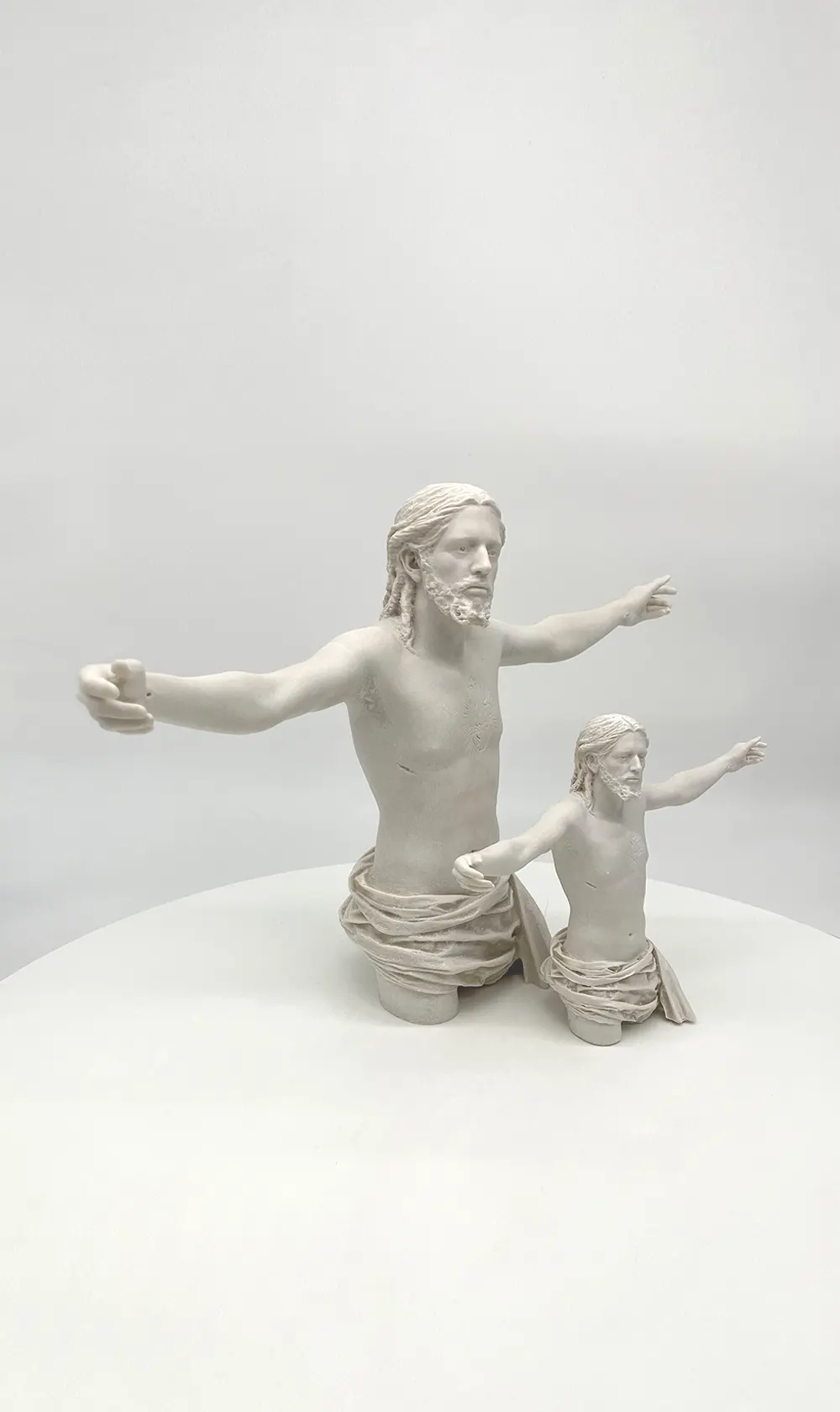
A project directed by the artist Javier Viver was carried out in the oratory. The project consisted in the realization of the altarpiece, altar, crucifix, tabernacle, ambo and seat.
PROJECT CONCEPT
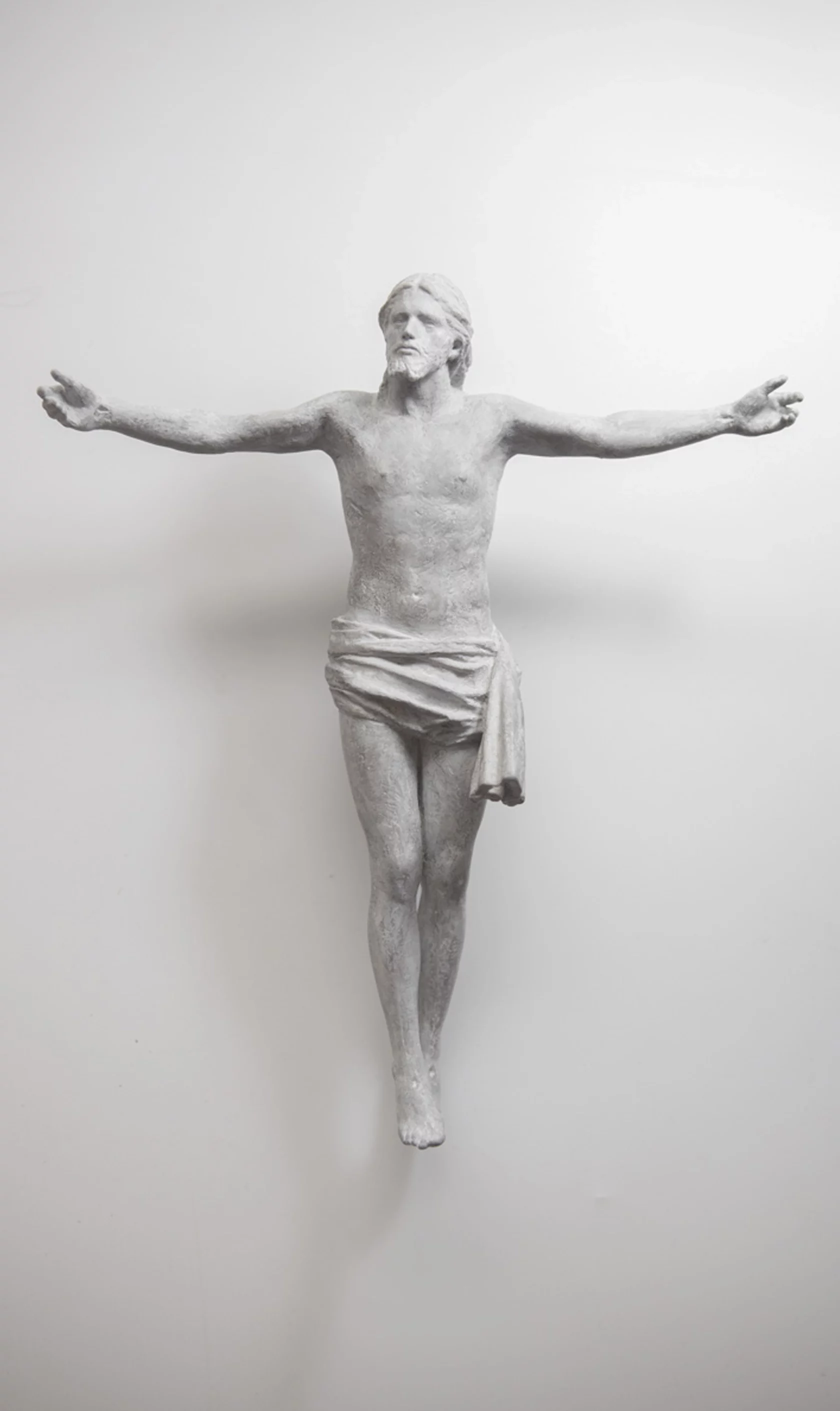
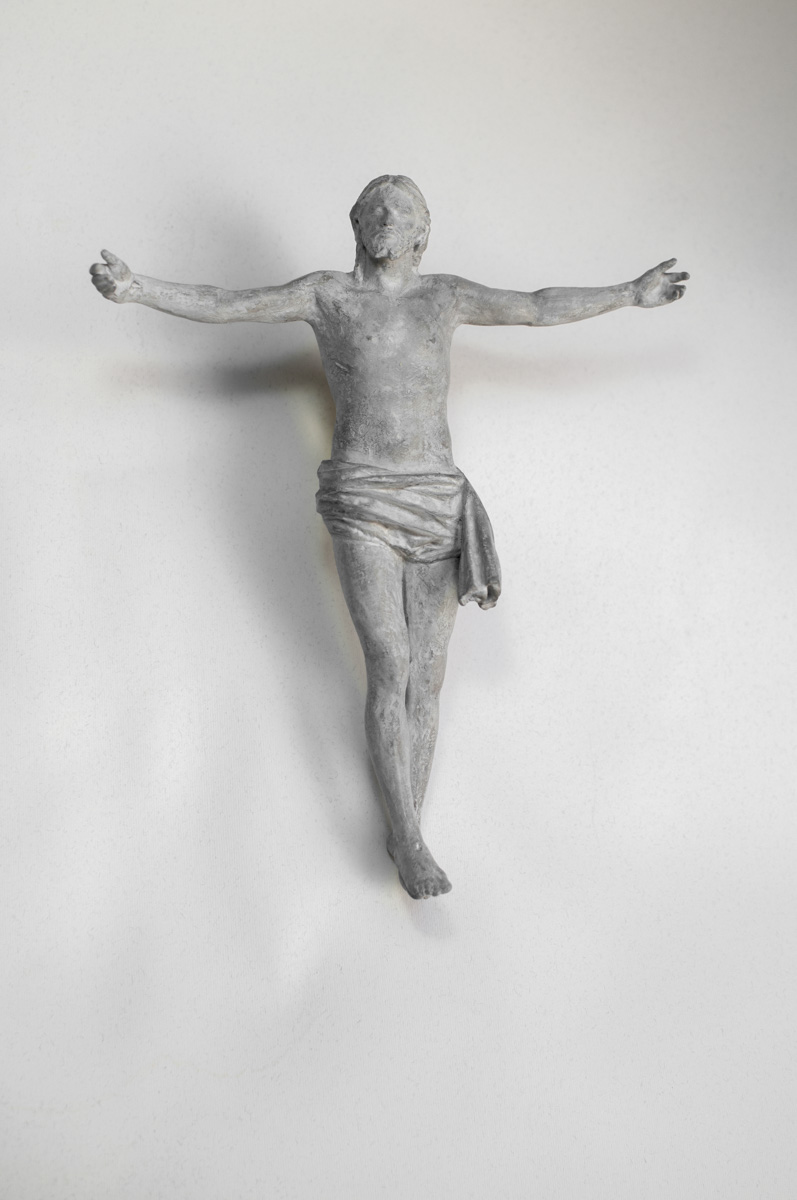
The altarpiece shows a round sculptural group of the Calvary represented as the triumph of the Cross in the tradition of the tree of life. In this way, it graphically shows what is celebrated on the altar: the passion, death and resurrection of Christ.
What is liturgically actualized on the altar is visually represented on the altarpiece.
The scene of Calvary
The scene of Calvary is dominated by the tree of the Cross on which the salvation of the world is nailed. Very close to Christ, at the foot of the Cross is his mother, Mary, and John with her. Christ is alive, triumphing on the Cross, with the gesture of an eternal priest, embracing the whole of humanity: "et ego si exaltatus fuero a terra omnia traham ad meipsum". In this sense the representation is linked to an ancient tradition that has its culminating point in the Romanesque Christ mayestático: an original way of expressing the Paschal Mystery of Christ.
From the tree of the Cross and the tabernacle
From the tree of the Cross some roots grow around the tabernacle, signifying the Eucharist as the adorable fruit of the Cross. Other roots extend throughout the story reaching to the side scenes and rooting the work tables of the workshop of Joseph, Mary's husband, and of our Father's room:
"All the works of men are done as on an altar, and each of you, in that union of contemplative souls which is your day, says in some way your Mass, which lasts twenty-four hours, in expectation of the next Mass, which lasts another twenty-four hours, and so on until the end of your life."
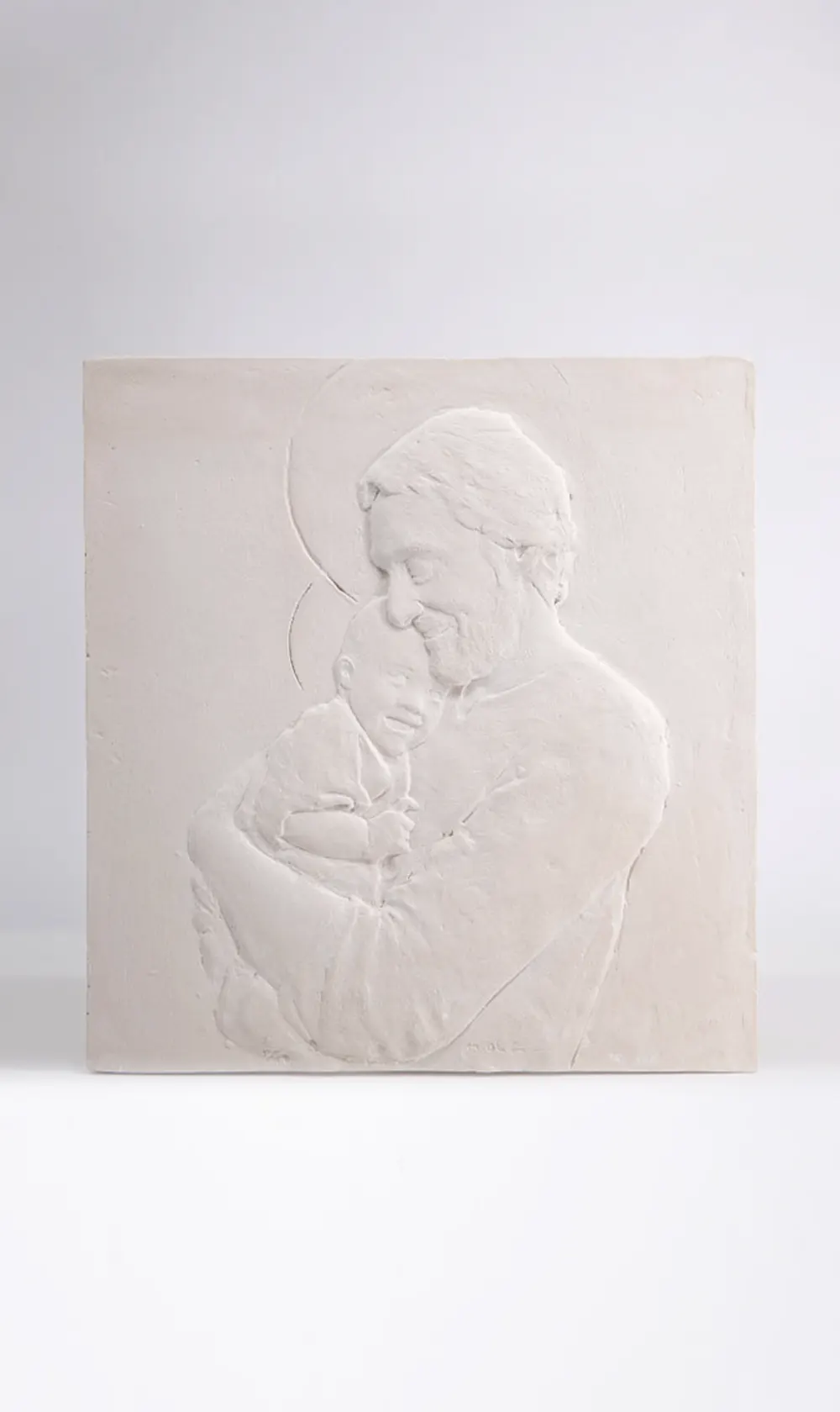
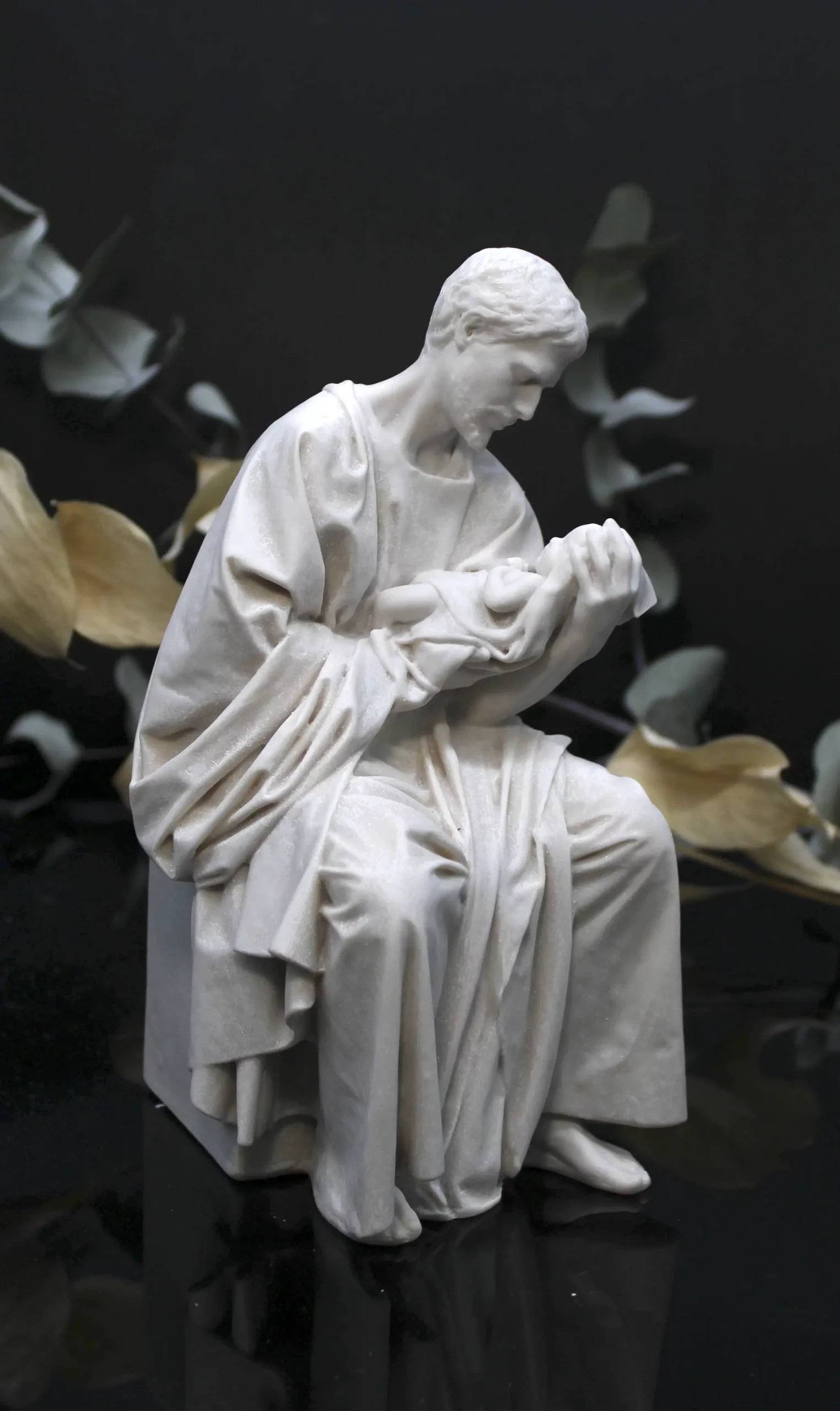
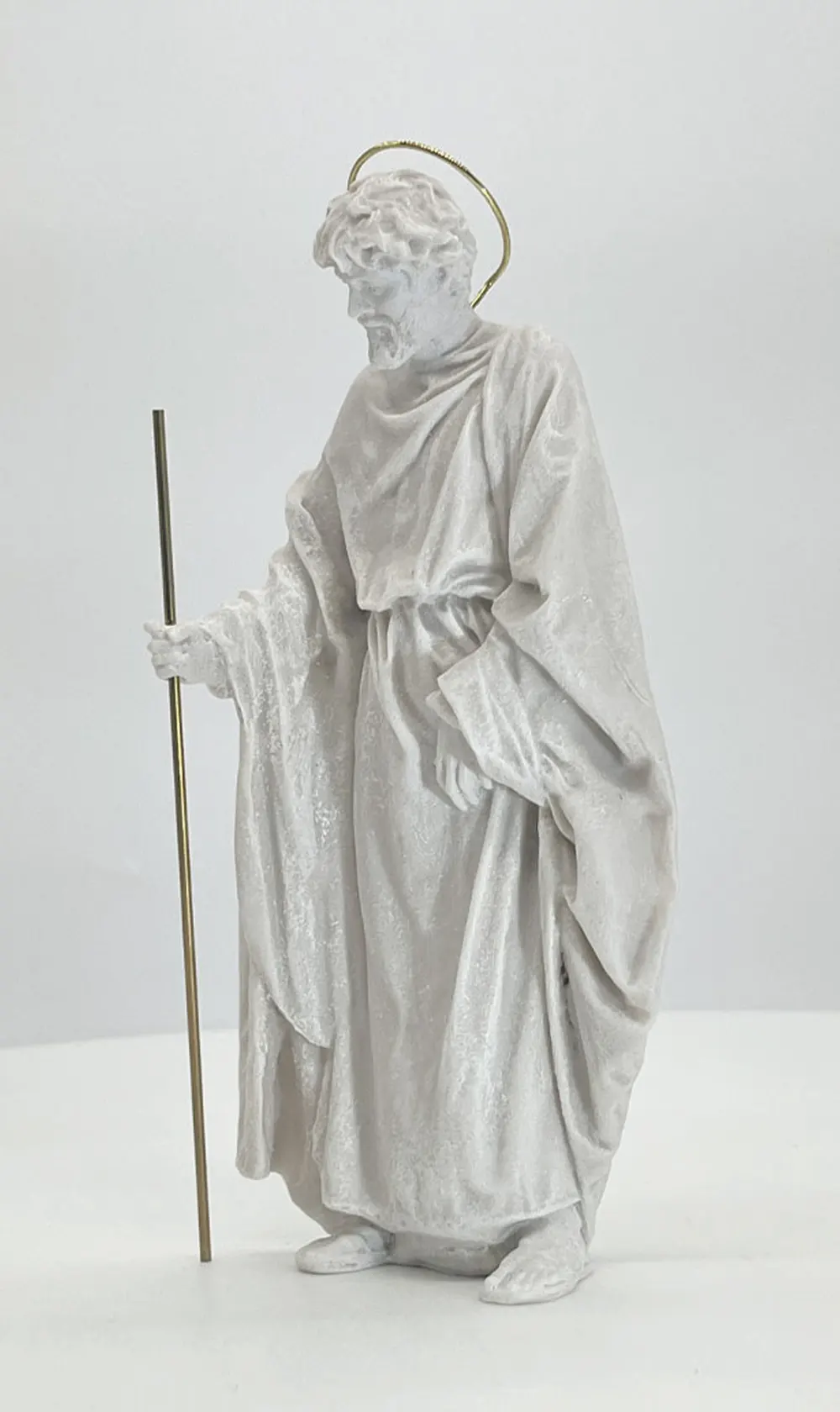
In this way, ordinary life appears to be connected to the Paschal Mystery of Christ; St. Joseph and St. Josemaría contemplate Christ's triumph from their place of work and fall to their knees in adoration, overwhelmed by the "magnalia Dei.
The scene is framed by a gold background, screened by translucent glazes, which produces a golden, supernatural light. This golden background indicates the timeless character that unifies the scenes under a single landscape. The eternal character of each Mass is thus staged: "the clocks should stop".
The sculptural motif of the altar is a relief of the Paschal Lamb and in the upper part the engraved motto, written by means of incisions: "et ego si exaltatus fuero a terra omnia traham ad meipsum". The motif for the front of the ambo is the dove representing the Holy Spirit. Finally, in the tabernacle, the tasty fruits of the tree of life are represented in relief.
PROCEDURES AND EXECUTION
The composition of the altarpiece
The composition of the altarpiece - in the form of - represents the Cross that dominates the frontal view of the altarpiece. It is 9 m high and 12 m wide. The horizontal arm of the T is composed of the Calvary scene in the center (Christ on the tree of the Cross, Mary and John) and the scenes of St. Joseph and St. Josemaría on both sides, in their usual work setting. St. Joseph is placed to the right of the Cross and our Father to its left. In this way the reading is ordered according to the chronological succession: St. Joseph, Christ as the center of the story, and St. Josemaría. At the same time it is contemplated in its entirety in the present: the eternal present of God in which we participate through the liturgy.
On the vertical axis of this T, below the cross, is the tabernacle crowned by the roots of the flowering tree forming an orchard.
The sculptural ensemble will be made of birch wood, patinated with translucent glazes in light tones: the 7 round images of larger-than-life dimensions -between 2 and 2.30 m-, the tree of the Cross itself, its roots, the scenographic, vegetal and floral motifs that make up the scenes and ornament the tabernacle.
The back of the altarpiece that makes up the T is composed of 51 wooden panels of approximately 1 x 2m, entirely gilded with gold leaf and covered with translucent resins of different densities.
LITURGICAL ELEMENTS
The altar, the ambo and the back of the seat will be made in lost wax cast bronze and will be patinated in light and warm tones, close to gold. The tabernacle, the crucifix and the candlesticks will be gilded by immersion and burnished in matte tones. The ornamental treatment of these elements will maintain unity at all times.
The relief of the frontal of the tabernacle should have on its surface, in relief, a still life with the fruits of the tree of life.
The altar and ambo will be covered with patinated bronze reliefs. The sculptural motif of the altar is the Paschal Lamb.
The ambo should be the same height as the altar, although it may have a raised wooden lectern on which the sacred books rest. The motif depicted on its front is the dove of the Holy Spirit.


The oratory project is an oratorical experience during the school day, which aims to promote an encounter of Jesus with the children, through prayer.
Thank you Alma for your comment. No doubt about it. Are you referring to this particular oratorio project? Do you know it ? just to add what you point out to the description. Thank you